Knowing how to prevent frozen pipes in Idaho comes down to a short list of chores done before the cold arrives. The Western Regional Climate Center's Idaho climate narrative puts mean temperatures in the lower Snake River valleys at or below 32 degrees F through December and January, and the coldest nights run well below that. Water that sits still in an unheated space at those temperatures freezes, expands and splits the pipe. The leak shows up when it thaws. This guide covers where pipes freeze in valley homes, what to do in the fall, and what to do if a line freezes anyway. The fall chores take an afternoon, and they cost far less than calling a Treasure Valley plumber out to a burst pipe in January.
Where pipes freeze in Treasure Valley homes
Pipes freeze where cold air reaches them and heat from the house does not. In the valley that means a short list of places.
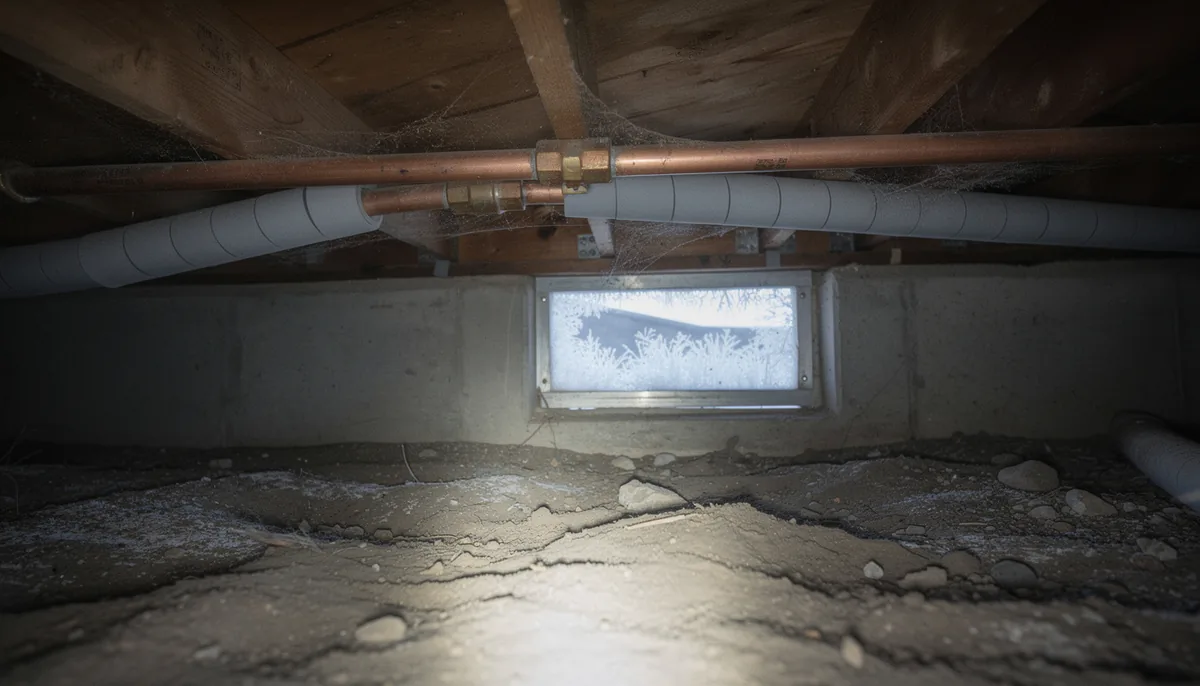
Crawlspaces come first. Many homes on the Bench, in Garden City and in older parts of Nampa and Caldwell sit over vented crawlspaces, and the supply lines run along the joists a few feet from those vents. Garages are next, since a lot of valley homes put the water heater, the softener and the main line in the garage. Then come sinks on exterior walls, outdoor spigots and the irrigation backflow device that sticks up out of the yard.
Homes that sat empty over the holidays, or rentals with the heat turned down, run the highest risk. A house kept warm on the inside can still have a cold corner where one pipe runs through an uninsulated wall.
Before the first hard freeze
Disconnect every garden hose. A hose left attached traps water in the spigot, and that is how a spigot splits inside the wall. If your spigots have a separate shut-off valve inside the house, close it and open the outdoor tap to drain the line. Many newer homes have freeze-resistant spigots, and those only work if the hose comes off.
Have the sprinkler system blown out. Pressurized irrigation in most valley subdivisions shuts off for the season, but water left in the lines and the backflow device can still freeze and crack the fittings.
Go under the house with a flashlight. Wrap any exposed supply line in foam pipe sleeves, paying the most attention to runs near vents and along the rim joist. Close or cover the foundation vents for the winter and reopen them in spring. In the garage, keep the big door closed on cold days, since the American Red Cross guidance on frozen pipes points out that supply lines in garages are exposed every time it opens.
During a cold snap
Open the cabinet doors under sinks on exterior walls so warm room air reaches the pipes. Let the faucet farthest from the main run at a thin trickle overnight. Moving water is much harder to freeze, and the cost of the water is small next to a burst line.
Keep the thermostat at the same setting day and night until the cold breaks. If you are leaving town, leave the heat on, and consider shutting off the main water valve so a split pipe cannot run for days before anyone notices.
If a pipe freezes anyway
The first sign is usually a faucet that gives a trickle or nothing at all while the rest of the house works. Leave that faucet open. Warm the pipe slowly with a hair dryer or a space heater kept at a safe distance, starting nearest the faucet and working back. Never use an open flame. Check the other faucets in the house, since one frozen line often means another.
If the pipe has already split, or water appears as it thaws, shut off the main valve first and then call. A home that freezes in the same spot every winter has a routing problem, and old galvanized lines that split once tend to split again. Rerouting a run away from an outside wall, or replacing a stretch of tired pipe, is easier to plan in the fall than to fix in midwinter. The leak repair and repiping page explains what that work involves.
When the cold breaks, check for hidden damage
A pipe that froze and did not leak may still have cracked. The split often stays sealed by ice until the thaw, so the first warm day after a cold snap is when to look.
Walk the crawlspace and the garage with a flashlight. Look for wet insulation, drips along the joists and damp soil under the supply lines. Check the outdoor spigots by opening each one and watching for water inside the wall or under the house.
The water meter helps here too. With every tap off, a dial that keeps moving points to a leak somewhere in the system. A small crack found in February costs less than a soaked subfloor found in April.
Frequently Asked Questions
At what temperature do pipes freeze in Idaho?
Water freezes at 32 degrees F, but pipes inside a heated house usually hold up until it gets well below that. The risk comes from unheated crawlspaces, garages and exterior walls, where the pipe sits at the outdoor temperature. Several nights below freezing in a row is when valley homes see splits.
Should I let my faucets drip at night in Boise?
On the coldest nights, yes, for the faucet farthest from the main and any sink on an exterior wall. A thin trickle keeps water moving, which makes it much harder to freeze. Open the cabinet doors under those sinks too, so warm room air reaches the pipes behind them.
Do I need to winterize my outdoor spigot if it is freeze-resistant?
You still need to remove the hose. A freeze-resistant spigot closes its valve inside the warm part of the wall, and it only drains if nothing is attached outside. A hose left on traps water in the spigot body, and that trapped water is what freezes and splits the pipe.
Should I close my crawlspace vents in winter in Boise?
Closing or covering them for the coldest months helps keep the crawlspace above freezing and protects the pipes along the joists. Reopen them in spring so moisture can escape. If your home has a sealed, conditioned crawlspace rather than vents, leave that setup alone and focus on insulating any exposed lines.
Ready to Get Started in Boise?
Boise Plumbing Co. serves Boise and the surrounding area. Get a free, no-obligation quote today.