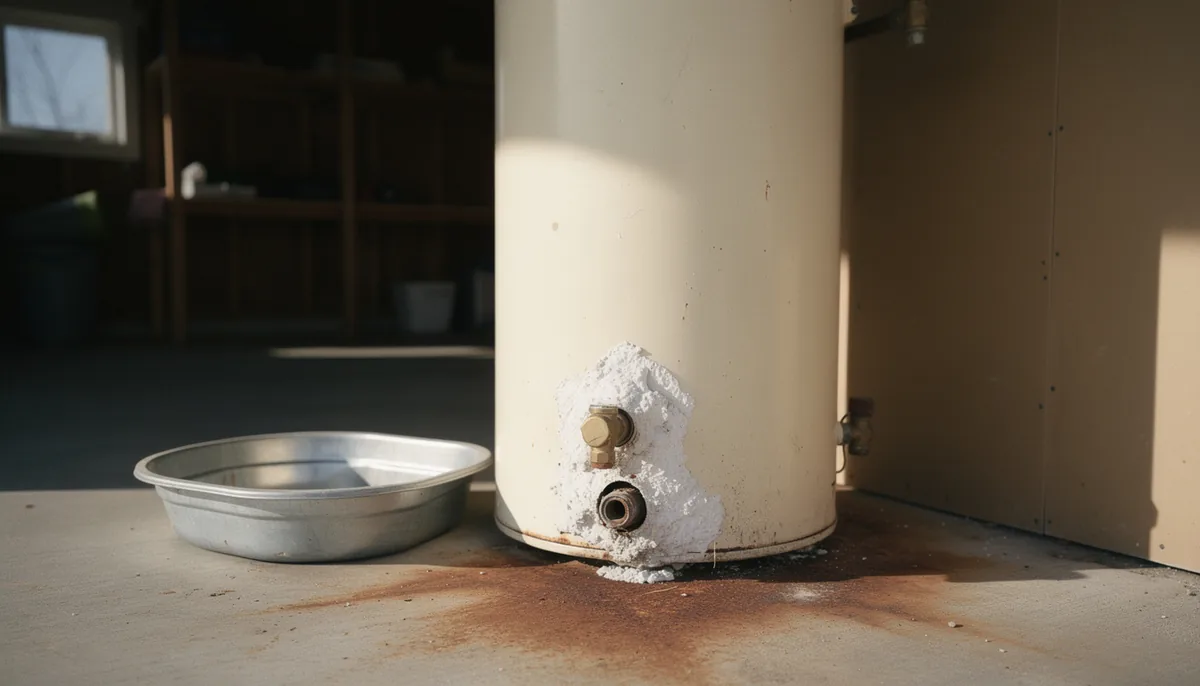
A water heater rarely dies without warning. The signs you need to replace your water heater tend to show up over weeks or months: a noise that was not there last winter, hot water that runs out sooner, a little rust in the tub. In Boise, hard water speeds that process up. This guide walks through the signs in the order a plumber checks them, and which ones point to a new heater versus a part. Whoever you end up calling, the first question is likely to be the same, so it helps to know the answer before you look for plumbing services in Boise and pick up the phone: how old is the tank?
Start with the age of the tank
Manufacturers and plumbers commonly quote 10 to 15 years for a tank water heater. Treasure Valley water tends to push units toward the shorter end of that range unless the tank has been flushed along the way.
The age is coded into the serial number on the label, usually as a month and year near the start of the string. If you cannot decode it, a photo of the label is enough for a plumber to read it. A tank past ten years that shows any of the signs below is a replacement candidate. A tank under ten years with the same sign may only need a part.
Noises, rusty water and lukewarm showers
Popping or rumbling while the burner runs is sediment. Minerals settle out of hard water, collect on the bottom of the tank and trap pockets of water that boil against the hot steel. Early on, a flush can clear it. Once the layer is thick and hardened, the noise stays and the tank loses capacity.
Rusty or brown hot water, with clear cold water, usually means the anode rod is spent and the tank lining has started to corrode. The anode is a metal rod that corrodes so the tank does not. Hard water wears it out sooner. A rod replaced in time can extend tank life. Once the steel is rusting, it cannot.
Hot water that runs out sooner than it used to points to sediment taking up space, a failed lower element on an electric unit, or a broken dip tube. Those last two are repairs. A tank full of scale is not.
Where the water is coming from matters
Water near the heater is the sign most people notice first, and the source decides everything. Dry the area, then look closely.
A drip from a pipe fitting on top, or from the drain valve near the bottom, is a repair. Water from the temperature and pressure relief valve, the brass valve on the side with a pipe running down, means pressure or temperature is too high. That can be a bad valve, a thermostat fault or a missing expansion tank. Never cap that valve; it is the heater's safety release.
Water seeping from the tank itself, from under the jacket or out of the bottom seam, means the steel has failed. No repair fixes that. Plan the replacement now, before the seep becomes a flood in the garage.
Smells, pilot trouble and tripped breakers
Hot water that smells like rotten eggs, while the cold water smells fine, usually comes from a reaction between the anode rod and bacteria in the tank. It is unpleasant but fixable. A flush and a different anode rod often clear it, and it does not mean the tank is failing.
On a gas heater, a pilot that will not stay lit usually points to the thermocouple or the gas valve. On an electric heater, a breaker that keeps tripping points to an element or a wiring fault. Both are parts problems on a sound tank. They become replacement questions only when they show up on an old tank that also has noise, rust or a seep.
A smell of gas near the heater is a different matter, and a job for the gas utility rather than a plumber. Get everyone outside before you make that call.
Repair or replace in a Boise home
There is no single price line between repair and replace, because the part, the tank and the house all move it. The age of the tank and the sign you found usually settle it. On a younger tank with a failed thermostat, element, gas valve or relief valve, the repair usually makes sense. On an older tank with sediment noise and rust, the same money tends to go further toward a new unit.
If you do replace, the City of Boise lists installing or replacing a water heater among the jobs that need a plumbing permit, as its homeowner's guide to permits explains. It is also the moment to compare efficiency grades, since ENERGY STAR's water heater listings separate high-efficiency models from standard tanks. A water heater repair and replacement visit can price the repair and the replacement side by side, so the choice is made on paper rather than in a cold shower.
Frequently Asked Questions
How long does a water heater last in Boise?
Tank heaters are commonly quoted at 10 to 15 years. Treasure Valley hard water tends to push them toward the shorter end, because sediment builds up and the anode rod wears out sooner. A tank that is flushed and has its anode checked every few years usually lasts longer than one that is never touched.
Is a rumbling water heater dangerous?
Usually not dangerous by itself. The rumble is water trapped under sediment boiling against the tank bottom. It does stress the steel and waste energy, and it means the tank is losing capacity. If the noise comes with water at the relief valve or a leak at the base, have it looked at soon.
Can I just replace the anode rod instead of the whole heater?
On a younger tank with clean hot water, often yes. A new anode rod can extend tank life, especially in hard water. Once the hot water runs rusty or the tank is seeping, the steel is already corroding and a new rod will not save it. At that point the money is better spent on a new heater.
Why does my hot water smell like rotten eggs?
Usually because of a reaction between the tank's anode rod and bacteria in the water, which produces a sulfur smell in the hot side only. It is fixable and rarely means the tank is failing. Flushing the tank and swapping the anode for a different type often clears it up.
Ready to Get Started in Boise?
Boise Plumbing Co. serves Boise and the surrounding area. Get a free, no-obligation quote today.