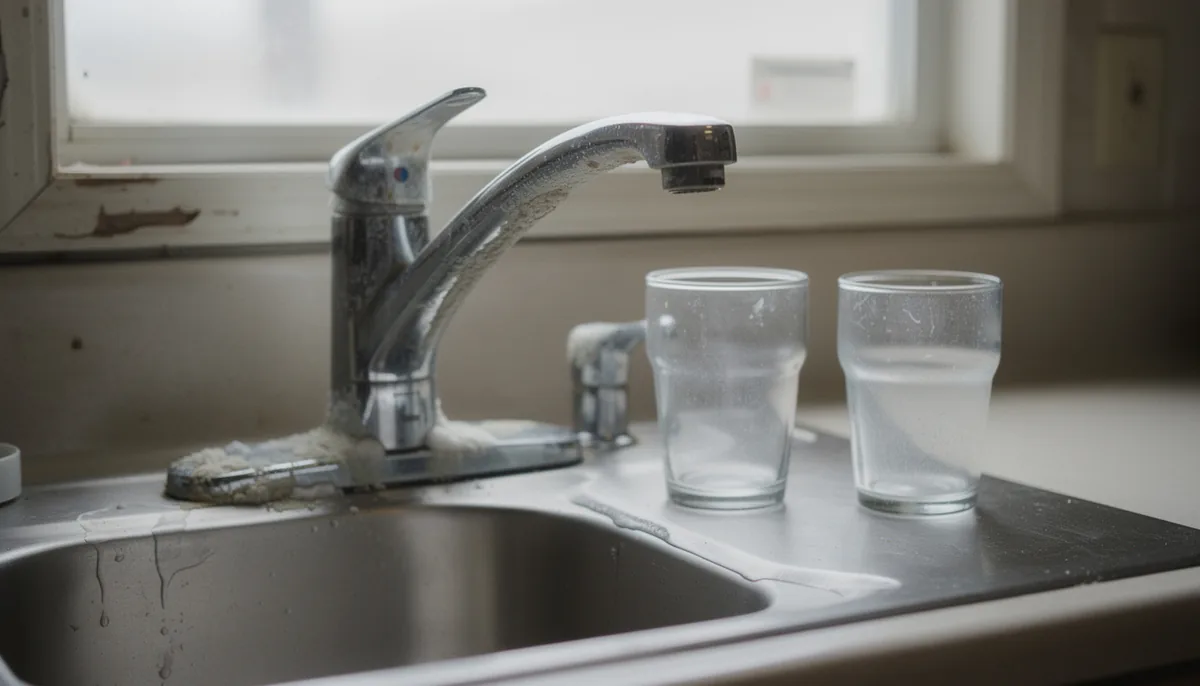
If you have moved to Boise from somewhere else, the white crust on the faucet may be what you notice before anything else. So why is the water so hard in the Treasure Valley? Most of it comes out of the ground, and groundwater carries the minerals of the rock it moved through. This guide explains where valley water comes from, how hard it runs, what it does inside a house, and the realistic options for living with it. If you are already weighing water softener installation, the sections on testing and sizing are the place to start.
Where Boise and Treasure Valley water comes from
According to Veolia, which serves much of Boise, about 70 percent of its supply is groundwater pumped from wells, with the rest drawn from the Boise River. Water that sits in an aquifer picks up dissolved calcium and magnesium from the surrounding rock and sediment. Those two minerals are what make water hard.
Meridian, Nampa, Caldwell and Kuna run their own systems, largely on wells as well, and hardness can vary from one well to the next. Every public system publishes an annual water quality report, and that report is the most reliable place to see your town's number. Search your city name plus "water quality report" and look for the hardness line.
How hard is hard?
The U.S. Geological Survey's water hardness scale calls water from 121 to 180 milligrams per liter of calcium carbonate hard, and anything above 180 very hard. Softener makers and plumbers usually talk in grains per gallon instead, and one grain per gallon equals about 17.1 milligrams per liter. A Boise water-treatment company's summary of the city's 2026 water quality report puts Boise tap water at about 10 to 13 grains per gallon, or roughly 171 to 222 milligrams per liter. On the USGS scale, that range starts in the hard band and runs into very hard.
Hardness is generally treated as a nuisance rather than a health concern. The minerals themselves are not harmful to drink. The trouble is what they leave behind when the water heats up or evaporates.
What hard water does inside a house
The visible signs are white scale on faucets and showerheads, spots and film on glassware, and soap that never quite lathers. Aerators clog, and showerheads lose their spray pattern.
The bigger costs are out of sight. Heat drives minerals out of the water, so scale builds fastest wherever water gets hot. In a tank water heater it settles as sediment on the bottom, rumbles, and shortens the life of the tank and the anode rod. In a tankless unit it coats the narrow passages of the heat exchanger, which is why tankless units in Treasure Valley water are usually descaled once a year. Dishwashers, coffee makers and washing machine valves take the same hit on a smaller scale.
Testing your own water
Before buying anything, find out your number. The annual report from your water system lists hardness, usually in milligrams per liter, sometimes in grains per gallon. Hardware stores sell test strips that give a quick reading at the tap, which is handy if your town draws from several wells.
Homes on private wells are a separate case. Rural lots around Kuna, Star and the Eagle foothills often run on their own wells, and no utility tests that water for you. Well water in the valley can carry iron or manganese along with hardness, and that changes what equipment makes sense. A lab test is the place to start.
Write the reading down. Any softener quote should be sized from it, along with the number of people in the house.
Your options, from vinegar to a whole-house softener
Living with it is a real choice. Soaking aerators and showerheads in white vinegar dissolves scale, and flushing the water heater every year or two slows the sediment.
A whole-house water softener treats the cause. It swaps calcium and magnesium for sodium or potassium as water passes through a resin tank, then flushes the minerals down a drain during its regeneration cycle. Most installs go where the main line enters the house, with a bypass so outdoor spigots stay on hard water for the lawn. Some homeowners keep one kitchen tap on unsoftened water for drinking, which is worth asking about if anyone in the house watches their sodium.
Filters that reduce scale are another route. They change how the minerals behave rather than removing them, and they suit some homes better than others. Market figures for a whole-home softener installed generally run from roughly $1,000 to $3,000, depending on the size of the unit, the plumbing at the entry point and whether a drain has to be added. A water softener and filtration visit starts with testing your water, so the unit is sized to your actual hardness and household use.
Frequently Asked Questions
Is Boise's hard water safe to drink?
Hardness is generally treated as a nuisance rather than a health concern, since calcium and magnesium are not harmful to drink. The problems are scale on fixtures, film on dishes and shorter water heater life. For anything beyond hardness, read your utility's annual water quality report, which lists what the system tests for.
How do I convert milligrams per liter to grains per gallon?
Divide the milligrams per liter figure by about 17.1. A water report showing 171 mg/L works out to about 10 grains per gallon, and 222 mg/L to about 13. Utility reports and the USGS scale tend to use milligrams per liter, while softener sizing usually runs in grains, so the conversion is worth doing before you compare quotes.
Will a water softener help a tankless water heater?
Yes, in most cases. Scale is what shortens the life of a tankless heat exchanger, and Treasure Valley water carries plenty of it. A softener or scale filter ahead of the unit slows the buildup. Annual descaling is still a good habit, and isolation valves on the heater make that service simple.
How much salt does a water softener use?
It depends on your hardness, household water use and how the unit is set to regenerate. Harder water and bigger households use more. A softener set to regenerate by metered use, rather than on a fixed timer, tends to use less salt because it only regenerates when the resin needs it.
Ready to Get Started in Boise?
Boise Plumbing Co. serves Boise and the surrounding area. Get a free, no-obligation quote today.